

The report details the experiences of pregnant and breastfeeding women amid the ongoing genocide in Gaza.
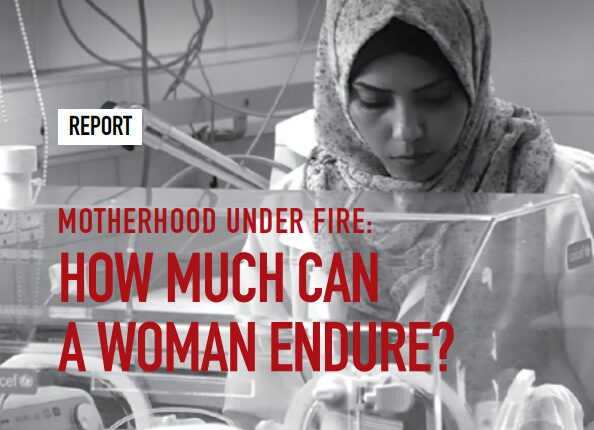
The report details the experiences of pregnant and breastfeeding women amid the ongoing genocide in Gaza. It shows how the collapse of healthcare services, forced displacement, and starvation policies have severely and persistently undermined pregnancy, childbirth, and breastfeeding, depriving women of their fundamental right to protect, care for, and raise their children in safety and dignity.
In February 2025, during the temporary ceasefire in Gaza, we conducted in-depth interviews with 21 pregnant and breastfeeding women who had been displaced during the second wave of evacuations from Nasser Hospital. They were sheltering in the Mesk and Layan IDP camp in al-Mawasi, Gaza. Established in 2024, the camp has primarily received women, children, and families.
Today, we release a report based on their testimonies, documenting the realities of pregnancy, childbirth, and breastfeeding under unbearable conditions. Since the ceasefire took effect in October 2025, the report’s findings have become even more apparent. As the intensity of airstrikes has declined, the suffering of pregnant and breastfeeding women amid current living conditions has become more visible. Ongoing displacement, severe food shortages, lack of access to medical care, and the systematic erosion of their capacity to survive continue to shape their lives and the lives of their children.
“We were displaced repeatedly, making it impossible to monitor the pregnancy. We had no way to track the fetus’s development, pulse, or overall health. We were constantly afraid that something would happen to us or the fetus, especially because we were far from a hospital for so long.” – Khuloud, mother of one, Beit Lahia
The findings reveal widespread harm. All 21 women interviewed had been forcibly displaced at least three times before reaching the Mesk and Layan camp. Fourteen lost their homes to airstrikes, and all were separated from family members. Many struggled to feed their children, often skipping or reducing their own meals so their children could eat at least once a day. Thirteen women experienced significant difficulties with breastfeeding, and at least eight lacked regular access to folic acid and other essential supplements critical for pregnancy and lactation.
The testimonies from Mesk and Layan demonstrate that the suffering endured by pregnant and breastfeeding women is not incidental — it is the direct result of Israel’s systematic destruction of Gaza. We call for immediate, safe, and unconditional access to food, medical care, and humanitarian supplies, and for accountability for policies that continue to undermine the most basic conditions for life and human survival in Gaza.