

A fearless Palestinian artist who turned film into resistance, Mohammed Bakri leaves behind a legacy defined by defiance, memory and the refusal to be silenced.
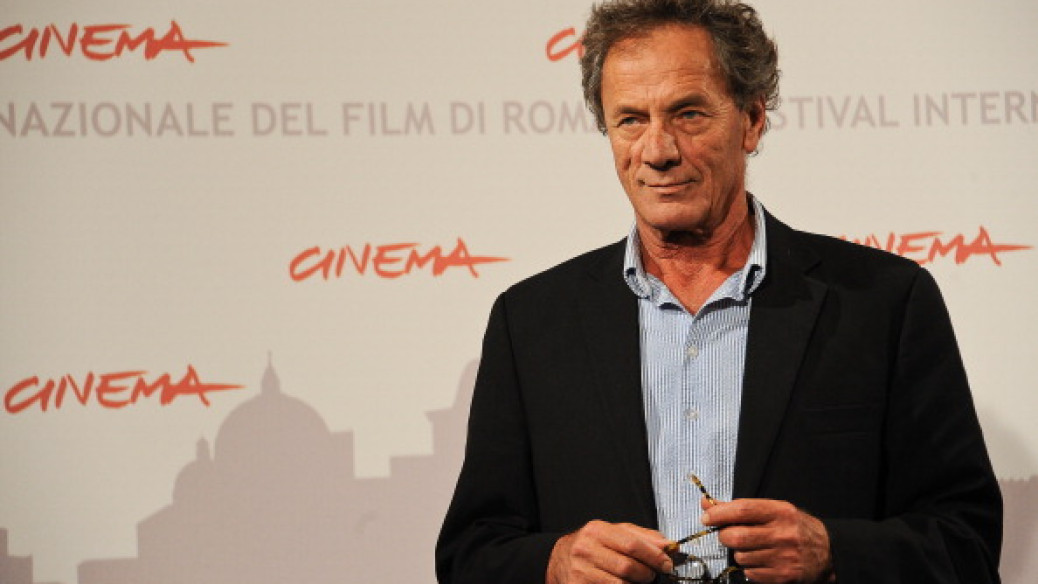
Palestinian actor, director and cultural icon Mohammed Bakri has died at the age of 72, leaving behind a body of work that defied erasure, challenged Israeli power and insisted on Palestinian humanity in the face of systematic repression.
Bakri died on Wednesday at Nahariya Hospital in northern Israel after suffering from heart disease, his family said.
His death marks the loss of one of Palestine’s most uncompromising artistic voices, who viewed art as a form of survival and resistance.
Born on 27 November 1953 in the Galilee village of Bi’ina, Bakri emerged as a towering figure in Palestinian cinema and theatre, known internationally for roles that centred Palestinian experiences and for films that directly confronted Israeli violence.
Over a career spanning five decades, he acted in more than 40 films and directed some of the most politically significant documentaries in modern Palestinian history.
Bakri studied acting and Arabic literature at Tel Aviv University in the 1970s, later performing on major stages including Habima Theatre, Haifa Theatre and Al-Kasaba Theatre in Ramallah.
In an interview with The New Arab’s Arabic edition last year, Bakri said: “In Palestine, we steal life in order to live and resist,” rejecting the idea that creativity could be separated from struggle.
‘Jenin, Jenin’ and decades of persecution
Bakri was relentlessly targeted by Israeli authorities and soldiers for his 2002 documentary ‘Jenin, Jenin’, which documented testimonies from residents of the Jenin refugee camp following a devastating Israeli military assault.
The film, which won Best Documentary at Carthage the same year, shattered the official Israeli narrative and became a lightning rod for censorship, lawsuits and intimidation.
Five Israeli soldiers sued Bakri for defamation, and while courts initially rejected the claims, Israeli legal pressure persisted for years.
In 2021, an Israeli court in Lod banned the film outright, ordered all copies seized, removed online links and fined Bakri hundreds of thousands of shekels, effectively criminalising Palestinian testimony.
For more than two decades, Bakri was dragged through Israeli courts, denied funding, excluded from cultural platforms and treated as a threat for refusing to be silent.
He repeatedly said the film did not claim legal truth, but preserved Palestinian memory, something Israeli institutions have long sought to erase.
Bakri’s son, renowned actor Saleh Bakri, said the sustained censorship and persecution his father had faced ultimately had the opposite effect, amplifying the film’s reach rather than suppressing it.
“From my experience with the censorship and the persecution of my father, it gave the film a push,” Saleh Bakri told The New Arab last year. “People were interested in seeing the film more.”
A life shaped by art, family and resistance
Despite financial hardship and systematic exclusion, Bakri continued to work, often funding films through personal loans taken by his wife, Leila. Together they raised six children, several of whom followed him into acting, including Saleh Bakri, Ziad Bakri and Adam Bakri.
Bakri also appeared in internationally acclaimed films including ‘Beyond the Walls’, ‘Haifa’, ‘Private’, ‘Wajib’, ‘The Tyrant’, ‘American Assassin’ and ‘All That’s Left of You’.
He collaborated with directors across Palestine, Europe and North America, helping place Palestinian cinema on the global stage at a time when visibility itself was a form of defiance.
He embodied the belief that Palestinians have the right to narrate their own lives, to mourn publicly, to document violence and to imagine freedom.
As a director, his work included ‘1948’, ‘Jenin, Jenin’, ‘Since You’ve Been Gone’ and ‘Zahra’.
Bakri received numerous awards, including the Palestine National Appreciation Award in 2023, and major international honours for acting and documentary filmmaking.
He is survived by his wife, his children and generations of Palestinians who saw themselves reflected, with dignity and defiance, in his work.